What Are the Most Common Issues Customers Face When Purchasing Studio Equipment?
Walk into many high-end control rooms, and you’re likely to find a fair amount of gear bought on a whim, expensive additions that promised to level-up tracking sessions, but ended up only bottlenecking the signal chain. The truth is, buying pro audio equipment gets frustrating fast when you fall into predictable traps.
When you track acoustic instruments or mix complex sessions, small equipment compromises add up in a hurry. Investing in audio tools designed for lifetime stability, rather than whatever is trending this month, ensures every dollar you spend directly improves your mix translation and tracking accuracy.
Mistake #1: Expecting Gear to Fix an Untreated Room
It is easy to assume a shiny new microphone or monitor setup will instantly transform your sound. In reality, acoustic reflections and standing waves warp what you hear long before sound hits a capsule or comes out of a speaker cone.
The Solution: Address Your Monitoring Accuracy First
Pairing sensitive microphones with untreated spaces usually captures room ring, HVAC hum, and low-end buildup. On top of that, relying on your software DAW for master volume control discards dynamic resolution as you turn things down. Preserving your full bit-depth takes a dedicated analog path. Integrating a reference monitor controller with a precision stepped attenuator maintains rock-solid stereo tracking down to fractions of a decibel.
Mistake #2: Overlooking Weak Links in the Signal Chain
Your recording setup operates as a single ecosystem. Spending your entire budget on a flagship microphone while plugging it into budget cabling, noisy power, or a thin-sounding interface preamp creates an instant bottleneck.
The Solution: Focus on High-Headroom Transparency
When tracking acoustic guitars or delicate vocal passes, signal integrity hinges on ultra-low-noise topology. Using reference microphone preamplifiers designed for high headroom yields transparent and musical audio performance. This lets you capture fast transients without smearing your mix in unwanted distortion across multi-track sessions.

Mistake #3: Buying Features You Will Never Use
Long feature lists are tempting. Dozens of inputs, multiple polar patterns, and endless control options look great on paper, but unused features add routing complexity that bogs down your creative process.
The Solution: Match Equipment to Your Everyday Workflow
Before pulling the trigger, ask yourself if a feature solves an actual problem in your room. If you record one vocal or acoustic guitar at a time, an oversized audio interface takes up desktop space better used for monitor placement or room treatment. Pick tools that streamline your daily process today while leaving smart room to expand down the road.
Mistake #4: Ignoring System Compatibility and Cables
Few things kill momentum like unboxing new hardware only to battle driver crashes, missing ports, or a mess of fragile dongles. Small accessories like stands and cables are easy to treat as afterthoughts, but a wobbly mic stand or cheap cable can ruin a perfect performance.
The Solution: Audit Your Connections and Studio Essentials
Double-check operating system support, power requirements, and physical jacks before buying. Setting aside a small portion of your budget for sturdy stands, comfortable closed-back headphones, and tour-grade cabling removes friction from your sessions and protects your setup.

Mistake #5: Chasing Hype Over Signal Clarity
Forums and videos love to pitch colored preamps as shortcuts to a professional sound. But while heavy harmonic coloration might sound flattering on a single solo track, stacking that same signature across 32 channels causes phase smearing and muddy low-mid buildup.
The Solution: Build on a Pristine Foundation
Transparent audio gear captures the true depth, dynamic range, and acoustic nuances of your source. Starting with an uncolored signal path gives you total control during mixdown, turning software or outboard EQ into creative stylistic choices rather than corrective fixes.
Mistake #6: Settling for Jittery Digital Conversion
Digital converter performance involves far more than sample rate numbers on a spec sheet. Latency, unstable drivers, and digital clock jitter introduce phase issues that smear spatial clarity and hollow out your low end.
The Solution: Anchor the Studio with Clock Stability
Connecting your rig through a rock-solid converter hub like the m701 audio interface gives you true reference A/D D/A conversion. Stable clocking eliminates phase distortion, letting subtle reverb tails and natural room cues translate accurately across the stereo field.

Mistake #7: Fighting Impedance Mismatches on Stage
Taking acoustic instruments from the studio to a live stage often creates tough loading problems. Piezo pickups and specialized transducers need exact input matching; without it, your tone turns harsh, thin, and prone to quack.
The Solution: Bring Studio-Grade Stage Preamplification
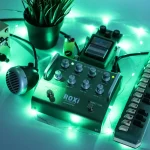
Acoustic performers rely on dedicated instrument preamplifiers designed to solve loading issues at the source. Putting a compact unit like the single-channel m303 acoustic preamp on your pedalboard gives you studio-grade parametric EQ, dead-silent performance, and flexible routing right at your feet.
Mistake #8: Settling for Disposable Hardware
Consumer audio gear often lands you in endless repair cycles, abandoned software updates, and steep depreciation. Buying gear built for temporary convenience drains your studio budget in the long run.
The Solution: Choose Mission-Critical Reliability
Designed and built in Lyons, Colorado since the 1990s, Grace Design products feature modular construction, rugged chassis, and long-term factory support. Backed by an unrivaled 5-year or 20-year transferable warranty, our gear is built for a lifetime, and we still proudly service equipment we made 30 years ago.
Ready to upgrade your signal path? Find an authorized Grace Design dealer to test our gear in your space.

Frequently Asked Questions
Why does accumulative preamp coloration hurt large recording sessions?
While harmonic coloration can sound pleasing on a single channel, tracking dozens of channels through colored preamps accumulates phase distortion and low-mid buildup. Transparent preamplification preserves clarity, dynamic range, and separation across complex mixes.
What is the advantage of an external monitor controller over software volume control?
Software attenuation reduces listening volume by discarding bit depth, effectively lowering dynamic resolution. Dedicated hardware monitor controllers maintain full digital-to-analog converter resolution while using balanced, precision analog attenuators for volume control.
How do I test if new gear is providing true audible gain or just volume variance?
Always level-match comparison sources within 0.1 dB using calibrated pink noise or reference audio tracks. Louder signals naturally sound wider and fuller to human hearing, masking true phase response and tonal fidelity differences.