Front-End Amplification: Why the Best Microphone Preamps Anchor Your Signal Chain
Even with the best microphone in the world, a mediocre preamp can still flatten everything it captures. If the very first circuit in your path strays, softens transients, or chokes dynamic response, those beautiful micro-details vanish forever before hitting a single converter chip or DAW track. Here at Grace Design, we have spent three decades hand-crafting microphone preamplifiers that ensure those critical initial inches of copper and silicon preserve every drop of your performance.
Get the signal wrong at the very start, and no amount of processing downstream brings those details back. Here, we break down what a standalone preamp actually does differently, and why built-in interface preamps fall short by comparison.
What Does a Standalone Preamp Actually Do for Your Signal Chain?
A standalone microphone preamplifier acts as the critical foundation of your entire recording chain. It raises delicate, low-voltage microphone signals up to robust line level, ensuring your recording system receives strong, healthy audio. Crucially, a standalone preamp presents precise load impedance to the microphone capsule, maximizes dynamic range, preserves the signal’s transients, and translates low-level ambient details without adding harmonic distortion or unwanted coloration. Without this precise initial amplification, downstream analog-to-digital converters or processors are forced to digitize a compromised source.
Why Built-In Interface Preamps Fall Short
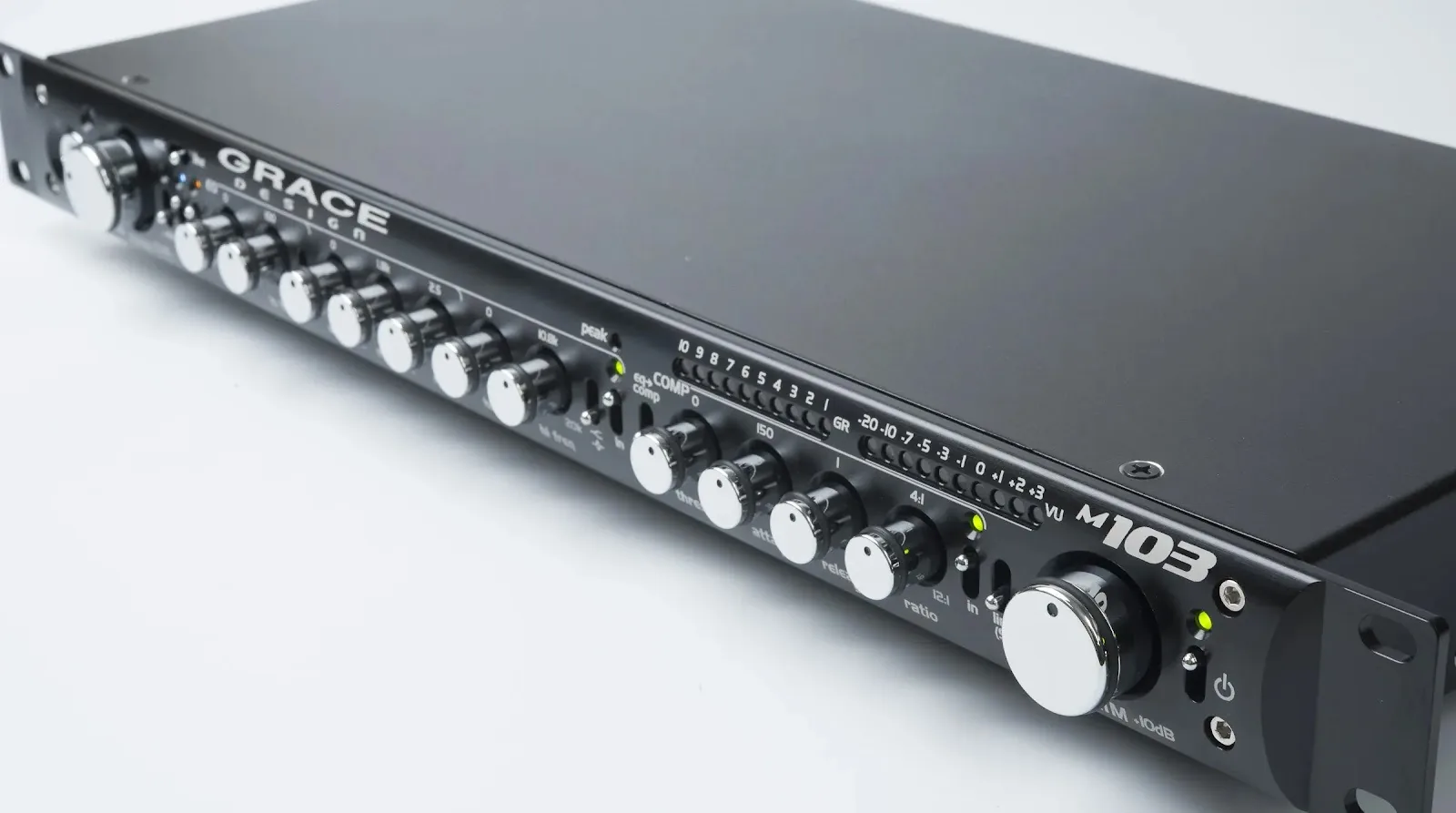
A common misconception is that because contemporary audio interfaces feature impressive spec sheets, dedicated outboard preamplifiers are no longer necessary. That assumption overlooks the physical realities of everyday gain staging.
Audio interface designs mostly excel at AD/DA conversion, but often their built-in preamps can operate under severe budget, space, and thermal constraints. When you crank the gain on a quiet ribbon mic using a built-in interface preamp, you often end up lifting the background noise floor along with your source.
Interface Preamp: Weak Analog Gain → A/D Conversion → Digital Gain Boost = Elevated Noise Floor
Dedicated Preamp: High-Headroom Analog Gain → Full-Scale A/D Conversion = Pristine Detail & Quiet Floor
By using dedicated transimpedance architecture before conversion, you drive your A/D converter at its optimal sweet spot. You capture rich, transparent resolution while maintaining a whisper-quiet signal-to-noise ratio.
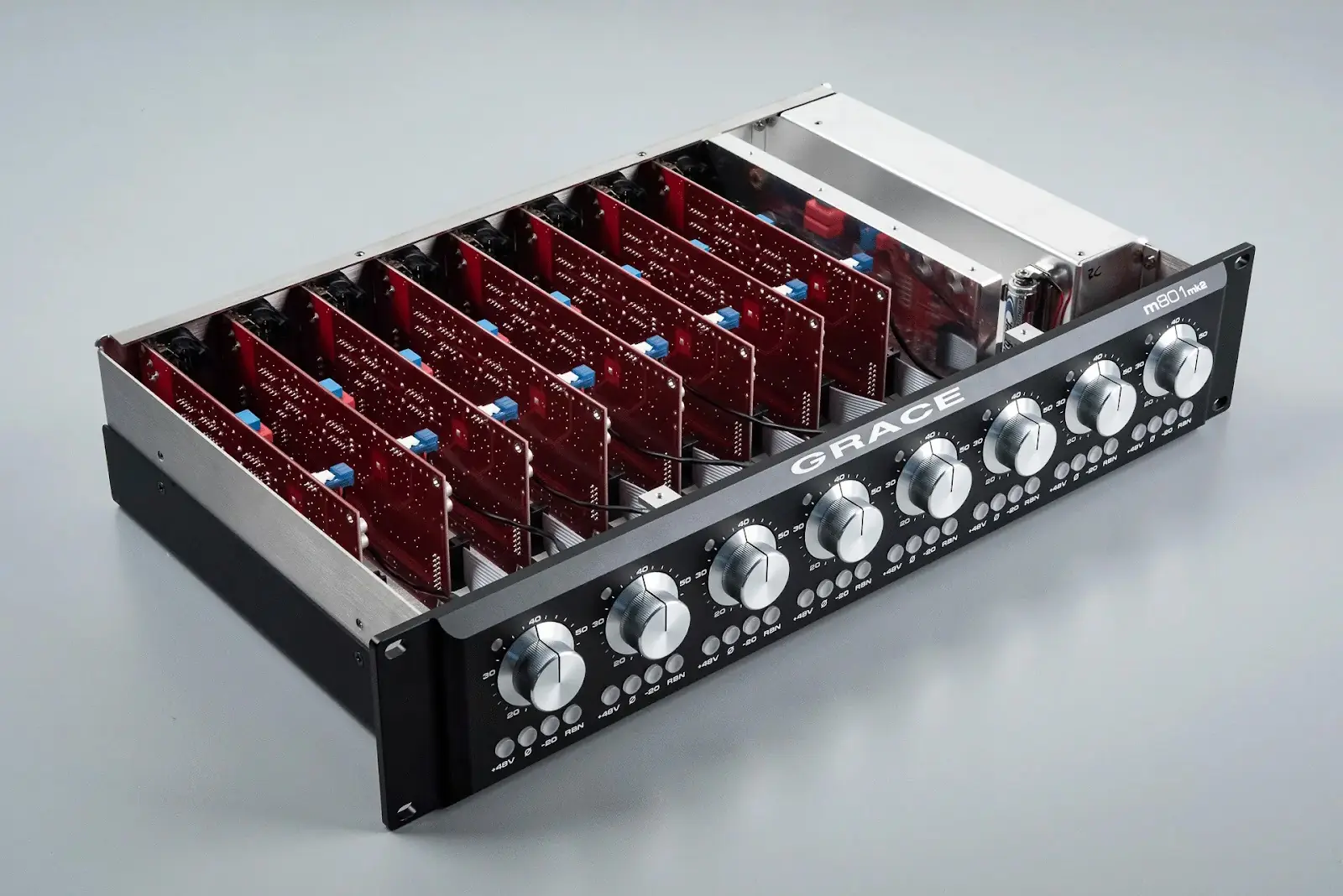
Finding Your Fit: Grace Design Standalone Preamplifiers
Whether tracking a full acoustic ensemble or running a single ribbon mic in a quiet vocal booth, choosing the right physical layout keeps your workflow smooth and focused purely on making music.
Engineering for Lifetime Performance
We aren’t interested in making disposable gear destined for a landfill three years down the road. Every unit leaving our shop is built by family and friends right here in Colorado.
Transimpedance Circuitry: Rapid transient speed captures delicate acoustic percussion without softening the initial attack.
High Common-Mode Rejection (CMRR): Rejects unwanted electromagnetic interference over long cable runs.
Dedicated Ribbon Mode: Optimizes impedance loading and protects passive ribbons to let delicate ribbons breathe.
Transferable Warranty: Backed by an industry-leading 20-year or 5-year transferable warranty on our analog and digital hardware.
Our engineering philosophy focuses purely on delivering transparent and musical audio performance. When your gear delivers mission-critical reliability, you stop troubleshooting technical bottlenecks and focus on making great music.
Explore our complete family of Grace Design microphone preamplifiers to find the ideal anchor for your studio setup.
Frequently Asked Questions
Why does a transformerless design matter for transient response?
Transformers introduce magnetic saturation and phase shifts at extreme frequencies. A transformerless, transimpedance circuit design allows micro-transients—like the strike of a bow or the snap of a snare—to pass through unimpeded, preserving original depth and dynamic imaging.
Can a standalone preamp improve performance with passive ribbon microphones?
Passive ribbon and dynamic mics require substantial gain without adding background hiss. A dedicated standalone preamp delivers high-gain output with an extraordinarily low noise floor, ensuring weak signals remain full, detailed, and quiet.
Are Grace Design preamplifiers supported long-term?
We still proudly service gear built 30 years ago. Real people answer our phones in Lyons, CO, and no technical question is ever too small.