How Do You Know if a Preamp Pedal Is Right for Your Setup?
Imagine: Soundcheck just wrapped and the room is filling up. You step up to your instrument only to realize your tone is completely collapsing through the front-of-house PA. Your low end turns to mud, or your picking dynamics come through the stage monitors sounding flat and lifeless. It is a frustrating reality every touring musician faces: trying to tame a piezo transducer’s harshness without having a quality preamp at your feet.
That’s the job of a dedicated preamp pedal. It solves the impedance problems, adds good-sounding gain, and helps you craft a genuinely musical instrument signal instead of just a louder one. Here’s how to tell if your rig actually needs one.
Do I Need an Instrument Preamp Pedal?
If your tone goes dull from an impedance mismatch, your stage sound changes depending on the room, or a piezo pickup sounds harsh in the monitors, then a dedicated preamp pedal is worth adding. A good one handles active impedance matching and studio-grade gain staging, then lets real parametric EQ shape what’s left, so the signal hitting the house system stays true to your beloved instrument no matter what room you’re in.
The clearest sign is inconsistency: the same instrument sounding full in a studio and thin or brittle through a house PA, especially with piezo and under-saddle pickups. If that’s happening in a different room every night, or you’re switching between instruments mid-set, a preamp gives you one steady starting point. If your rig already sounds right and you never leave that room, you may not need one.
What Does a Preamp Pedal Actually Do for Your Signal Chain?
Most performing acoustic musicians, bassists, and multi-instrumentalists find out the hard way that plugging straight into a direct box or a house amp rarely captures what the instrument actually sounds like.
A dedicated acoustic preamp sits between the pickup and everything downstream, and it’s doing more than boosting signal. Three things go wrong without one, and a good preamp fixes all three:
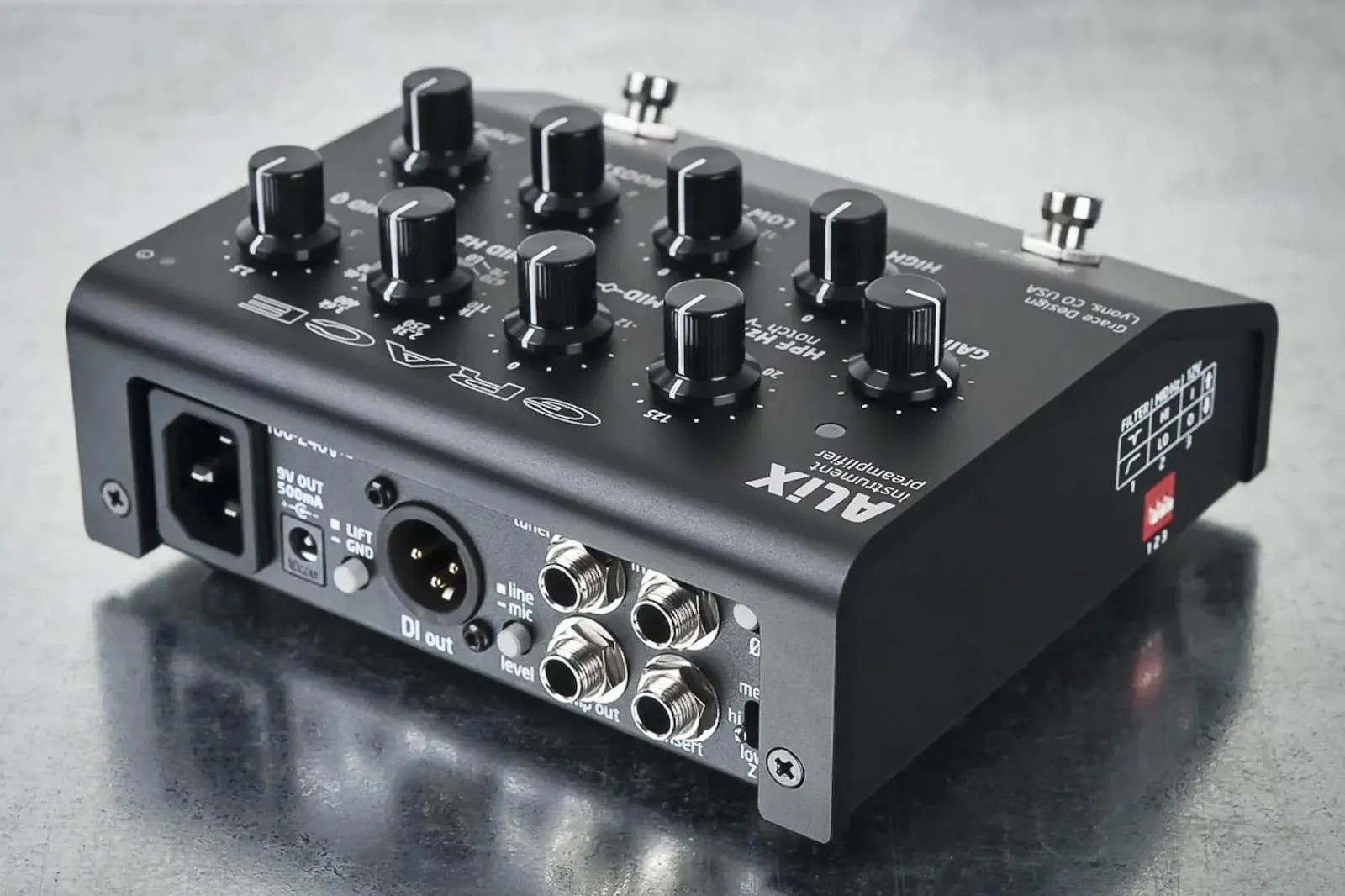
Impedance loading. Many passive instrument transducers need a very high input impedance, often 10 megohms, to avoid bass roll-off and harsh spikes in the high-end. A standard instrument input might load the pickup down and alter its sound for the worse. It’s the exact problem our studio-grade single-channel ALIX was built to solve.
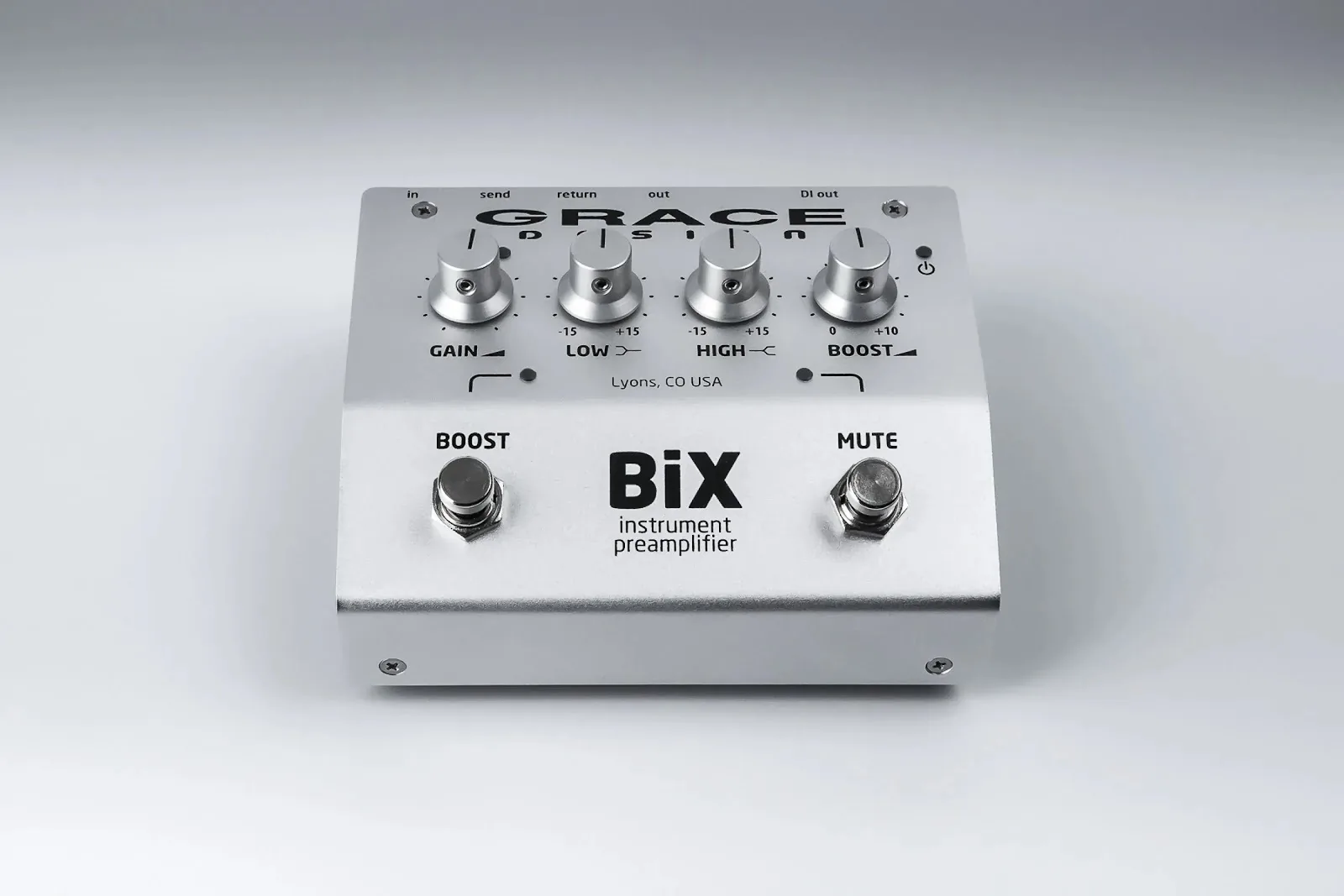
Frequency control that’s actually useful. The EQ knobs built into most instruments or inexpensive preamps are blunt tools. A high-quality stage preamp gives you parametric mid control, high-pass filters, and even a tunable notch filter, so you can kill feedback before it ever reaches the PA.
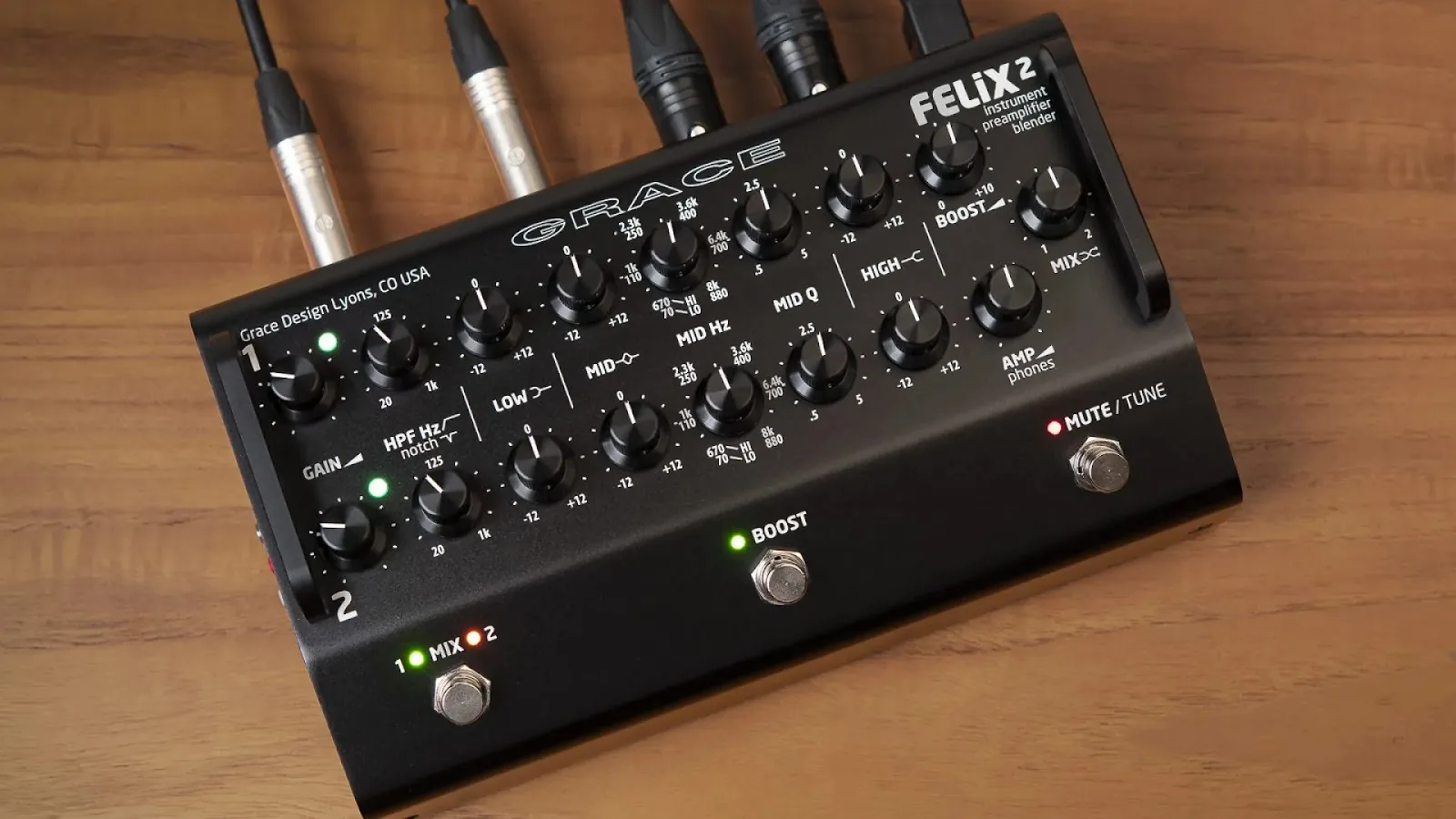
A direct output that sounds like your instrument, not a stage box. A balanced XLR out backed by low-noise analog circuitry means the engineer at front-of-house gets a full, detailed signal, not a thin one they have to fight with compression and EQ. Our two-channel FELiX2 takes it a step further, giving each instrument its own dedicated output.
Key Signs You Need a Dedicated Preamp Pedal
The Grace Design Difference: Heritage & Craftsmanship
Our benchmark when we build stage gear is simple: studio-grade sound that won’t quit on you mid-set. Grace Design started with two brothers who loved making and recording music and got tired of gear that got in the way of it, and that hasn’t changed. We’re still in Lyons, Colorado, building it ourselves.
Whichever preamp ends up on your board, the goal is the same: get out of the way and let your instrument sound like itself.
If you’re running a condenser or dynamic stage mic instead of a pickup, our REX and ROXi microphone preamp pedals put that same studio front end on your board.
Every unit we make is built to outlast the gig, the tour, and the rest of your gear. Our analog instrument preamps carry a 20-year transferable warranty; everything else we make carries 5 years. If something ever does need attention, you’ll get a real person on the phone, someone who can actually help, even with gear we built 30 years ago.
Find the Right Preamp for Your Rig
Ready to upgrade your live acoustic tone? Explore the full acoustic instrument preamp lineup to find the right one for how you play.
Frequently Asked Questions
Can I run a preamp pedal directly into a venue’s sound system?
Yes. A dedicated instrument preamp has a balanced XLR output that works as a high-fidelity DI, sending a line- or mic-level signal straight to the front-of-house console.
What is the difference between a simple DI box and an instrument preamp pedal?
A passive DI box matches impedance and converts unbalanced to balanced; that’s about it. A preamp pedal actively boosts the signal, matches input impedance properly, and adds real EQ, high-pass filtering, and output control on top.
What if I’m using a microphone instead of an instrument pickup?
Our REX and ROXi microphone preamp pedals bring that same studio front end to vocalists and other mic-based performers, in the same pedalboard format.
How do I know if a preamp pedal is right for my setup if I already use an acoustic amp?
If you’re regularly playing through house PAs, switching between instruments mid-set, or your amp’s EQ can’t tame a piezo pickup the way a notch filter can, a dedicated preamp will make your tone more consistent night to night.